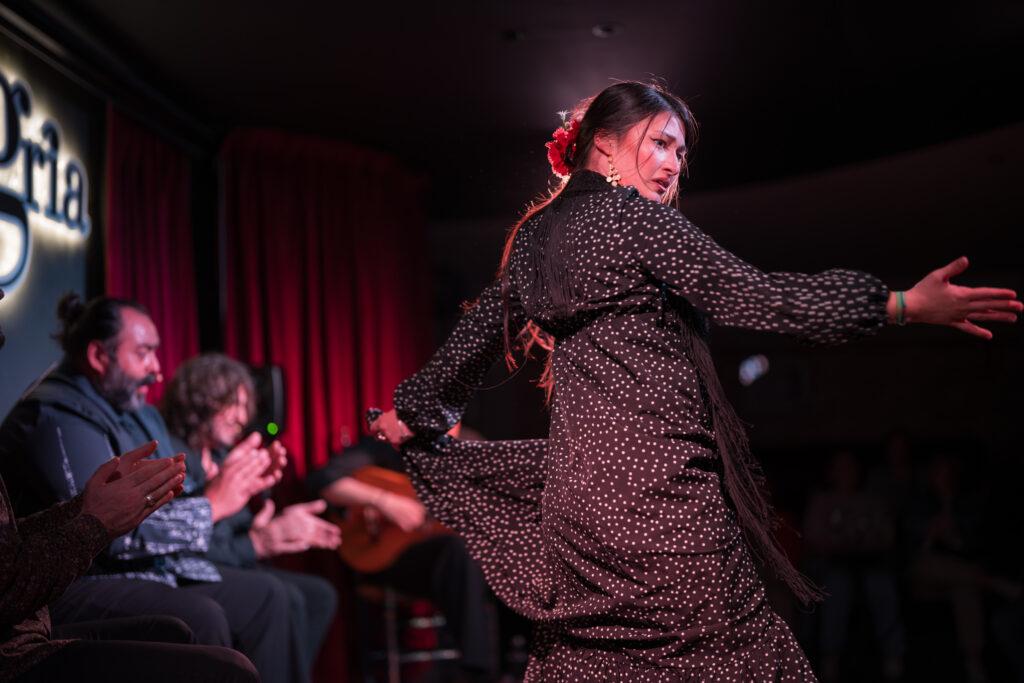
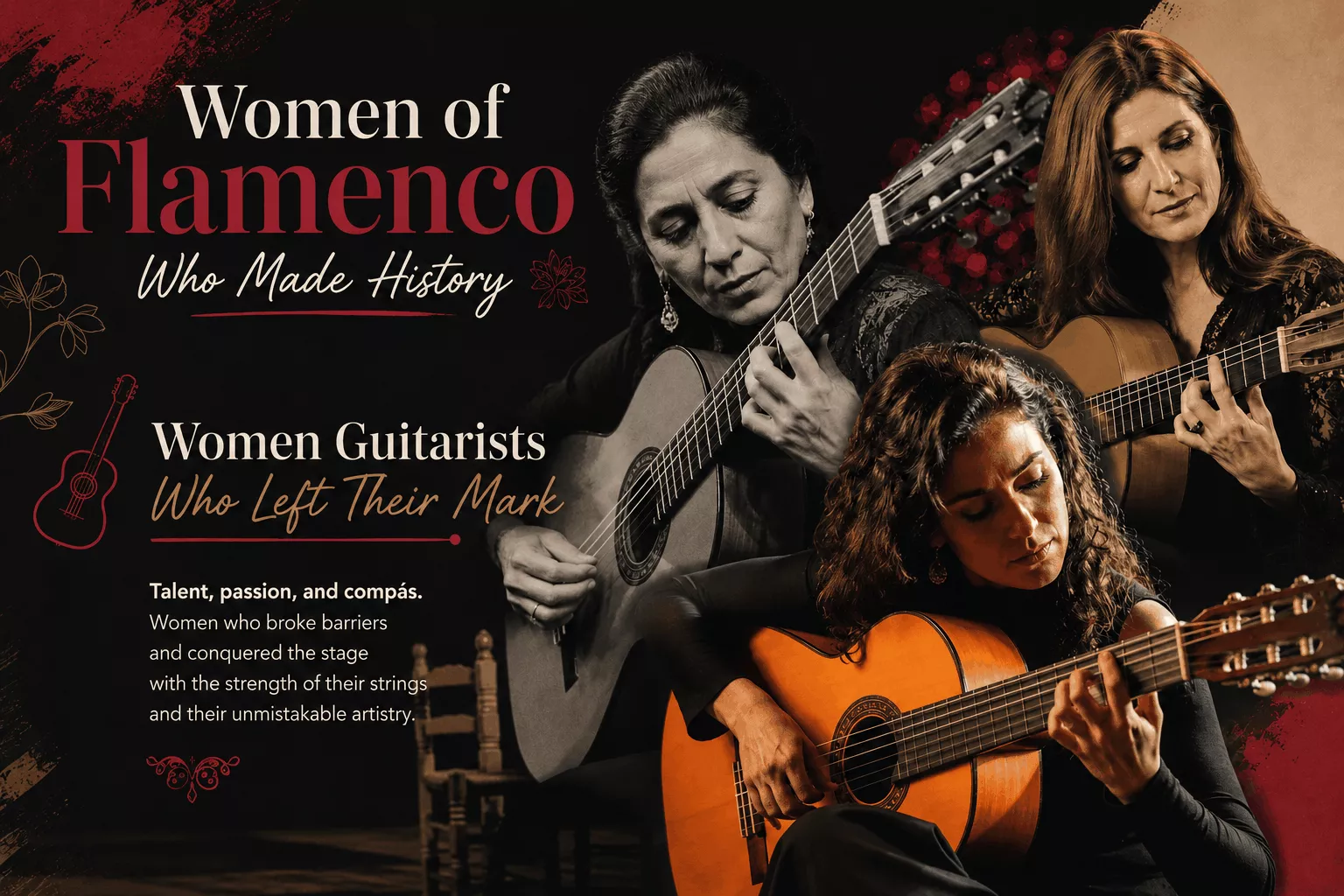

Although for centuries women had to forge their own path in a world dominated by men, many artists managed to leave an indelible mark on the history of flamenco. Singers, dancers and guitarists who, through their talent and personality, helped enrich this universal art and pass it on from generation to generation.
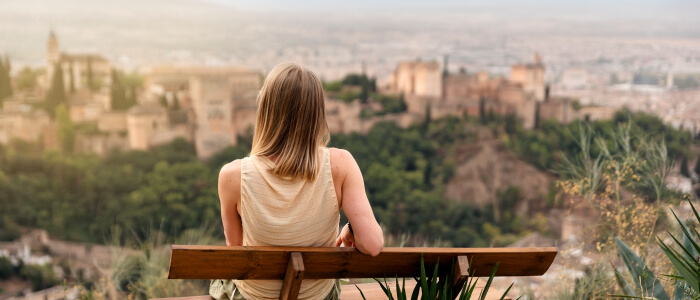
Today their names live on in theatres and form part of a legacy that continues to move all those who enjoy flamenco in emblematic venues such as the Albaicín in Granada.
The great female flamenco singers
Flamenco singing has produced essential female figures who defined different eras and styles.
Carmen Linares
Born in Linares (Jaén) in 1951, Carmen Linares is one of the most influential voices in contemporary flamenco. Her career has been recognised with numerous awards, including the Princess of Asturias Award for the Arts in 2022.
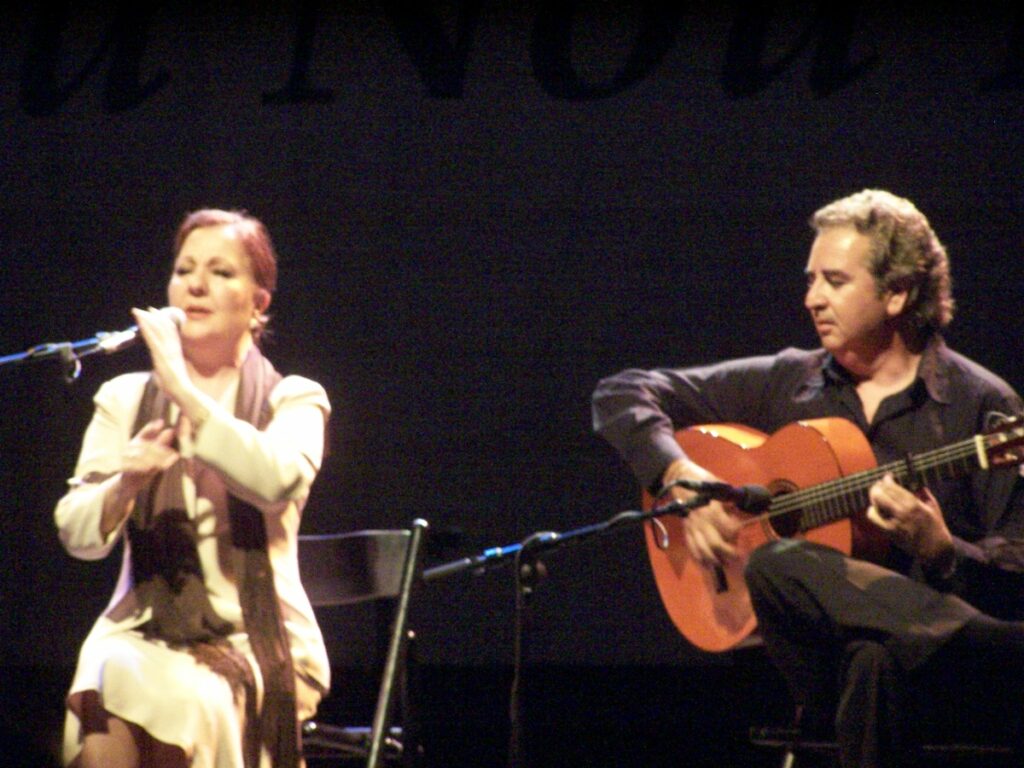
Among her most notable works is La mujer en el cante, a piece dedicated to championing the role of women within flamenco.
You might also enjoy: Enrique Morente: the singer who transformed flamenco
La Niña de los Peines
Pastora Pavón, universally known as La Niña de los Peines, is considered one of the greatest female flamenco singers of all time. She mastered virtually all the flamenco palos and worked alongside figures such as Manolo Caracol, Niño Ricardo and Manuel de Falla.
Her influence remains present more than a century after her first recordings.
Fernanda de Utrera
Fernanda Jiménez Peña was born in Utrera and built an extraordinary artistic career alongside her sister Bernarda. Her interpretation of the soleá made her an absolute point of reference for cante jondo.
Her deep, feeling-filled voice continues to be admired by fans and professionals alike.
You might also enjoy: The greatest flamenco singers in history
Dancers who revolutionised flamenco
Flamenco dance has found some of its most innovative and internationally celebrated figures among women.
Carmen Amaya
Carmen Amaya, born in Barcelona in 1918, transformed forever the way flamenco dance is understood. Her power, speed and expressiveness marked a clear before and after.
She performed across Europe and the Americas, appeared in films, and became one of the most internationally acclaimed Spanish artists of her time.
Juana la Macarrona
Juana Vargas, known as Juana la Macarrona, was born in Jerez de la Frontera in 1870. From a very young age she began performing in the cafés cantantes and soon earned national and international fame.
Her appearance at the Universal Exhibition in Paris cemented her status as one of the great masters of flamenco dance.
Sara Baras
The Cádiz-born dancer Sara Baras is one of today’s most prestigious artists. Her international career, her choreographies and her stage presence have made her a global ambassador for flamenco.
She has received numerous accolades, including the Gold Medal for Merit in the Fine Arts.
La Argentinita
Encarnación López, known as La Argentinita, was born in Buenos Aires in 1898 and developed much of her career in Spain. She was a close friend of Federico García Lorca and recorded several popular songs with him.
Her work helped bring flamenco to new audiences and establish it as a truly universal art form.
You might also enjoy: The greatest flamenco dancers in history
Female guitarists who left their mark
The flamenco guitar has traditionally been associated with men, but many women proved they could excel on the instrument too.
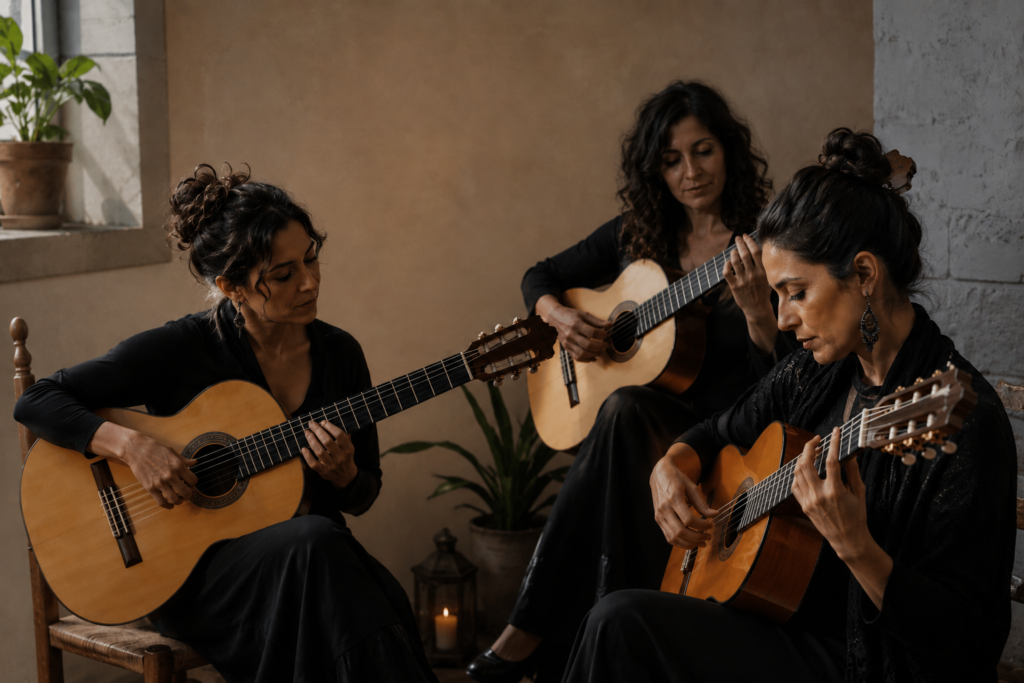
Trinidad Huertas «La Cuenca»
Born in Málaga in 1857, Trinidad Huertas was both a dancer and a guitarist. Her personality broke the moulds of her time and she achieved considerable international renown.
Her innovative style and stage presence made her a true pioneer.
Aniya la Gitana
Ana Amaya Molina, known as Aniya la Gitana, was celebrated for accompanying herself on the guitar while she sang. Federico García Lorca even mentioned her in his studies on cante jondo.
Her talent was so widely recognised that she performed for the royal family.
Josefa Moreno «La Antequerana»
Pepa La Antequerana enjoyed an extensive career across Spain and the Americas. She sang and played the guitar at the same time — something highly unusual for her era.
Despite the fame she achieved, her later years were marked by financial hardship, a reality shared by many flamenco artists of earlier generations.
The legacy of women in flamenco
The history of flamenco cannot be understood without the contribution of these women. Through their talent, perseverance and personality, they helped elevate an art that continues to move millions of people today.
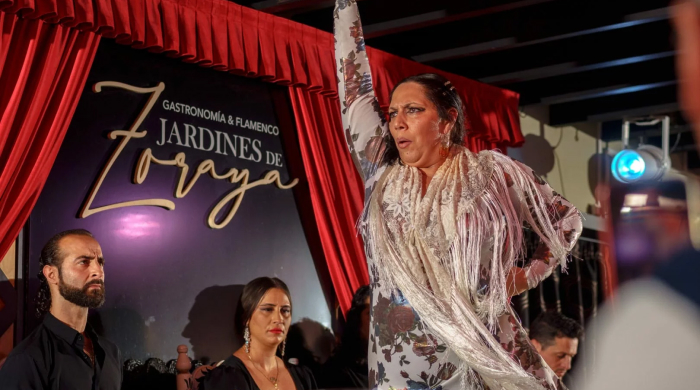
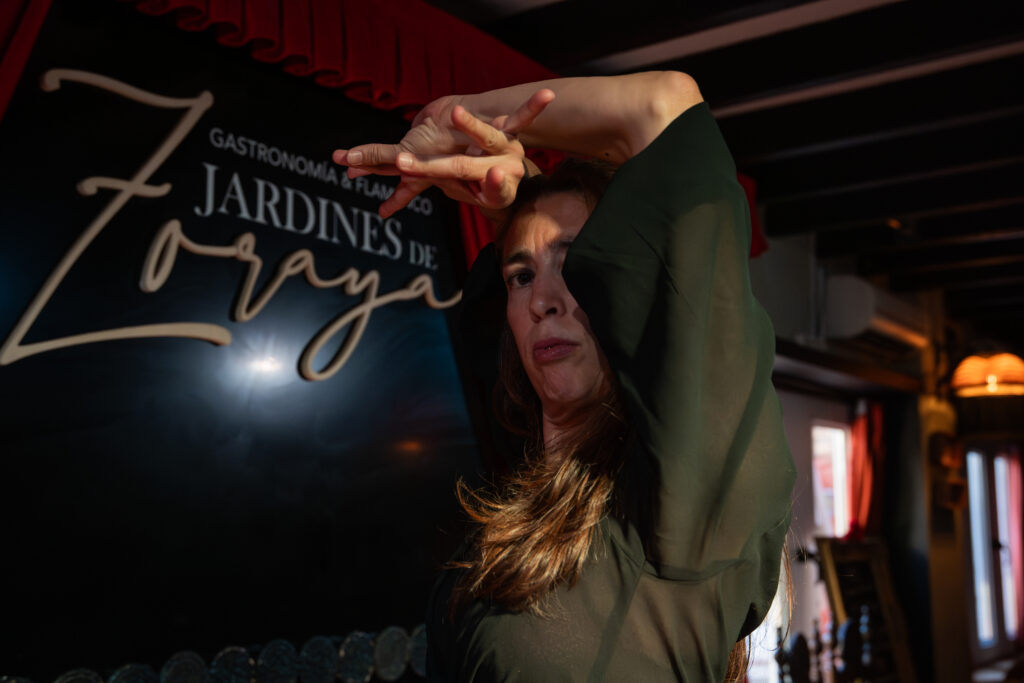
In Granada, a city intimately tied to flamenco, that legacy lives on every night in venues such as Jardines de Zoraya — a tablao in the heart of the Albaicín where dance, song and guitar keep the essence of this art alive while visitors enjoy a flamenco dinner and show experience in an authentic Granadine carmen.