Duende is when flamenco stops being performed and starts being felt.
What is flamenco duende?
To speak of flamenco duende is to speak of that instant that is hard to explain and impossible to fake. It does not always appear, it cannot be rehearsed, and it does not depend solely on the technique of the guitarist, the dancer, or the singer. It can emerge from a cracked voice, from a silence before the final phrase, from the stamp of a heel, or from a guitar note that seems to hang suspended in the air.
In flamenco, duende does not live in the artist alone: it is born in the encounter between the performer and the listener. It is not merely technique, nor is it merely emotion. It is the moment of deep connection between artist, music, and audience. Something aligns. Something invisible happens. And everyone present feels it, even if they cannot put a name to it.
That is why, when someone asks what flamenco duende is, the answer rarely fits into words. Because it is not simply about singing well, dancing with precision, or playing with virtuosity. Duende appears when, on top of all that, there is truth: when emotion overflows technique and becomes presence, when the artist surrenders completely and transmits something that lands straight in the chest. To speak of flamenco and duende is, at its heart, to speak of that mysterious force that turns a performance into something unforgettable.
You may also like: The Greatest Flamenco Dancers in History
What it means to “have duende” in flamenco
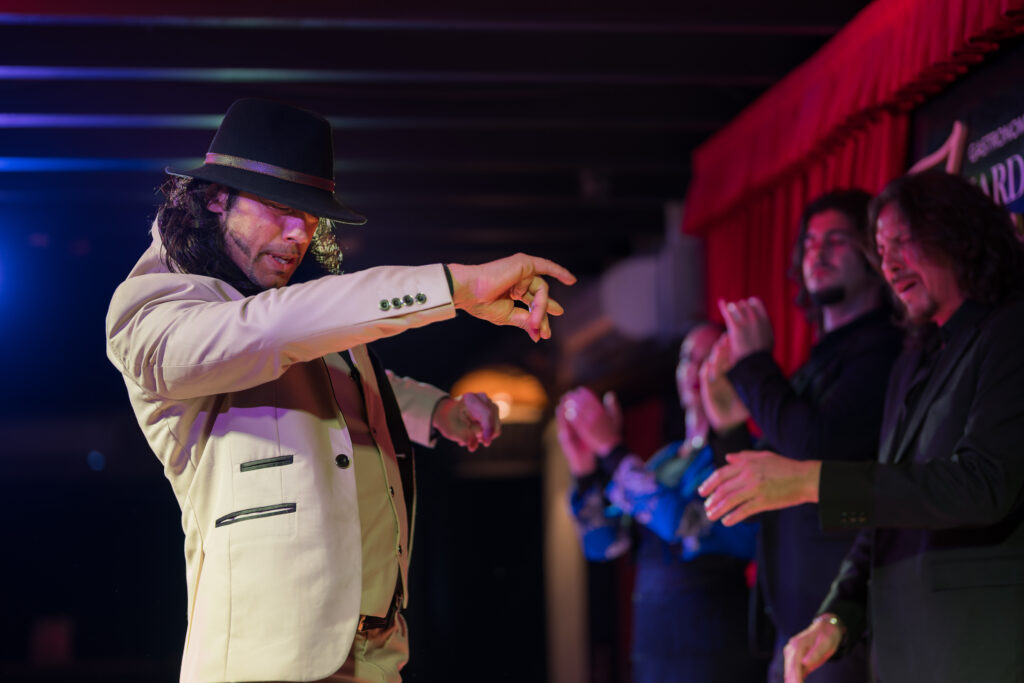
To say that someone “has duende” is one of the highest compliments in flamenco. But what it means to have duende goes far beyond talent or technical mastery: to have duende is to possess that special ability to move people, to convey truth, and to make whoever is in front of you feel something real.
Duende is giving someone goosebumps, a sustained silence, a held breath, an “olé” that escapes on its own. It is generating a shared emotion that was not planned. That is why duende cannot be copied: it is not taught like a choreography or learned like a musical scale. It is sought, pursued, awaited… and when it appears, it transforms the scene entirely.
Perhaps that is why flamenco duende remains one of the great mysteries of this art: because it belongs as much to the artist as to the moment. Because it is born from the rhythm, but also from the soul. Because it happens once… and lingers in memory long after the last chord.
Duende is not learned — it is felt
You can study the compás, memorise lyrics, or rehearse a choreography for years. But duende does not appear in any score or any method. It is not learned: it is felt. It appears, or it does not. And understanding that boundary is understanding the heart of flamenco.
The difference between technique and duende
Technique is the craft: control of the voice, precision of the feet, the clean hand on the strings. It is taught, corrected, and perfected with discipline and hours on the tablao.
Duende is something else. It is what happens when that technique stops being noticed, when the artist forgets they are performing and simply surrenders. Technique supports flamenco; duende ignites it. One exists so the other can appear, but they are not the same. You can have impeccable technique and never come close to duende… and you can have duende even when the voice trembles or the body no longer responds as it once did.
Why an artist can sing or dance perfectly and still not move you
We have all seen perfect performances that leave us cold. A singer hits every note, a dancer nails every zapateado, a guitarist solves the most difficult falseta without a single mistake… and yet something is missing.
What is missing is truth. Duende does not reward perfection but surrender. That is why a technically modest cante can give you goosebumps while a flawless execution leaves the room untouched. In singing, dancing, and guitar, the difference is never in doing it well, but in doing it truly.
Duende in cante, baile, and flamenco guitar
Duende does not manifest in a single way. It moves through cante, baile, and guitar, and in each it finds its own language. In flamenco, duende speaks through the voice, through the body, and through the strings — but it always says the same thing: this is real.
Duende in the flamenco singer
Perhaps the place where duende is most easily recognised is in the cante. In that quejío that raises the hairs on your skin, in the held breath before the verse, or in a lyric delivered from so deep within that it seems to pierce everything.
When we speak of duende in the flamenco singer, we often mean that unique ability to convey real emotion through the voice. It does not matter whether the voice is large or small, rough or clean: what moves us is not the volume, but the truth it holds.
A singer with duende does not perform a lyric — they live it, sustain it from within, and share it with whoever is listening. It is that voice with pellizco, with echo, with memory. The one you do not only hear… you feel.
Duende in the flamenco dancer
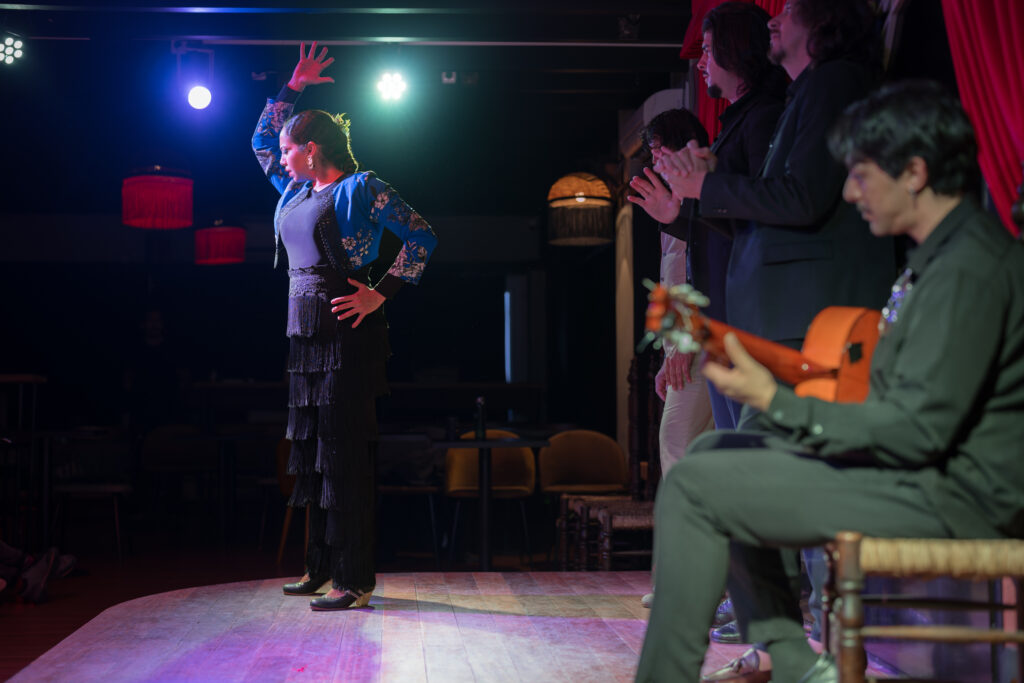
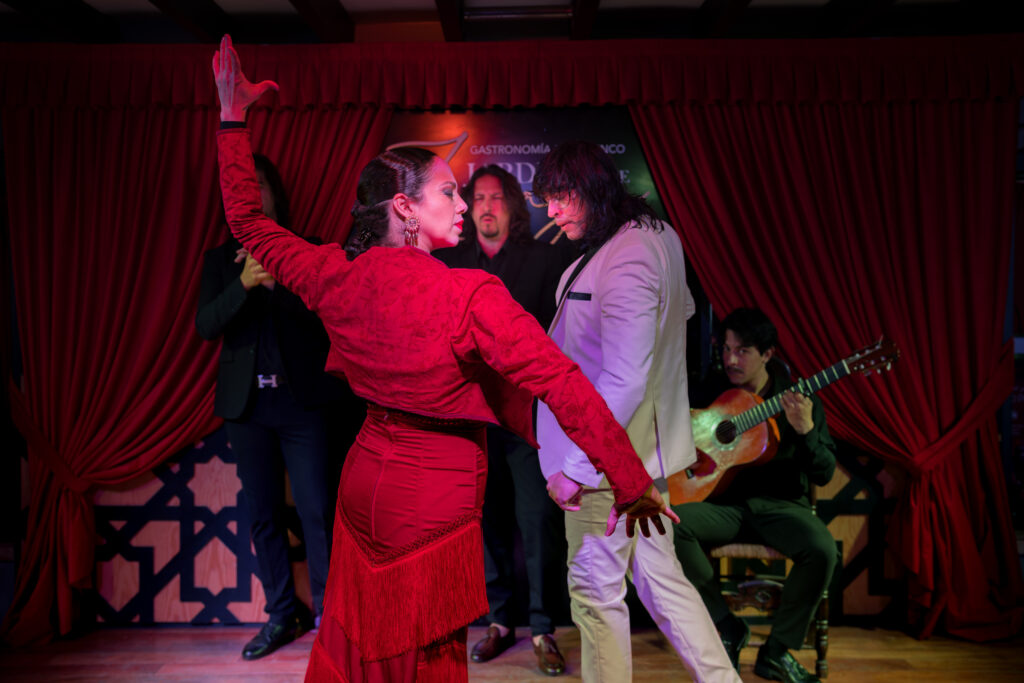
In dance, duende appears when the body stops executing steps and starts telling something deeper. It is not necessarily in the speed, the strength, or the technical difficulty.
Duende can inhabit a gaze, a pause, the way a skirt is held, the way arms are lifted, or the way the compás is marked from the floor. A dancer can master every movement with absolute precision and still not provoke that emotion. On the contrary: sometimes a single minimal gesture — a turn of the wrist, a suspended breath, a stillness in the space — is enough to fill the whole room with that energy.
That is what many people describe when they say someone “dances with duende”.
Duende in flamenco guitar
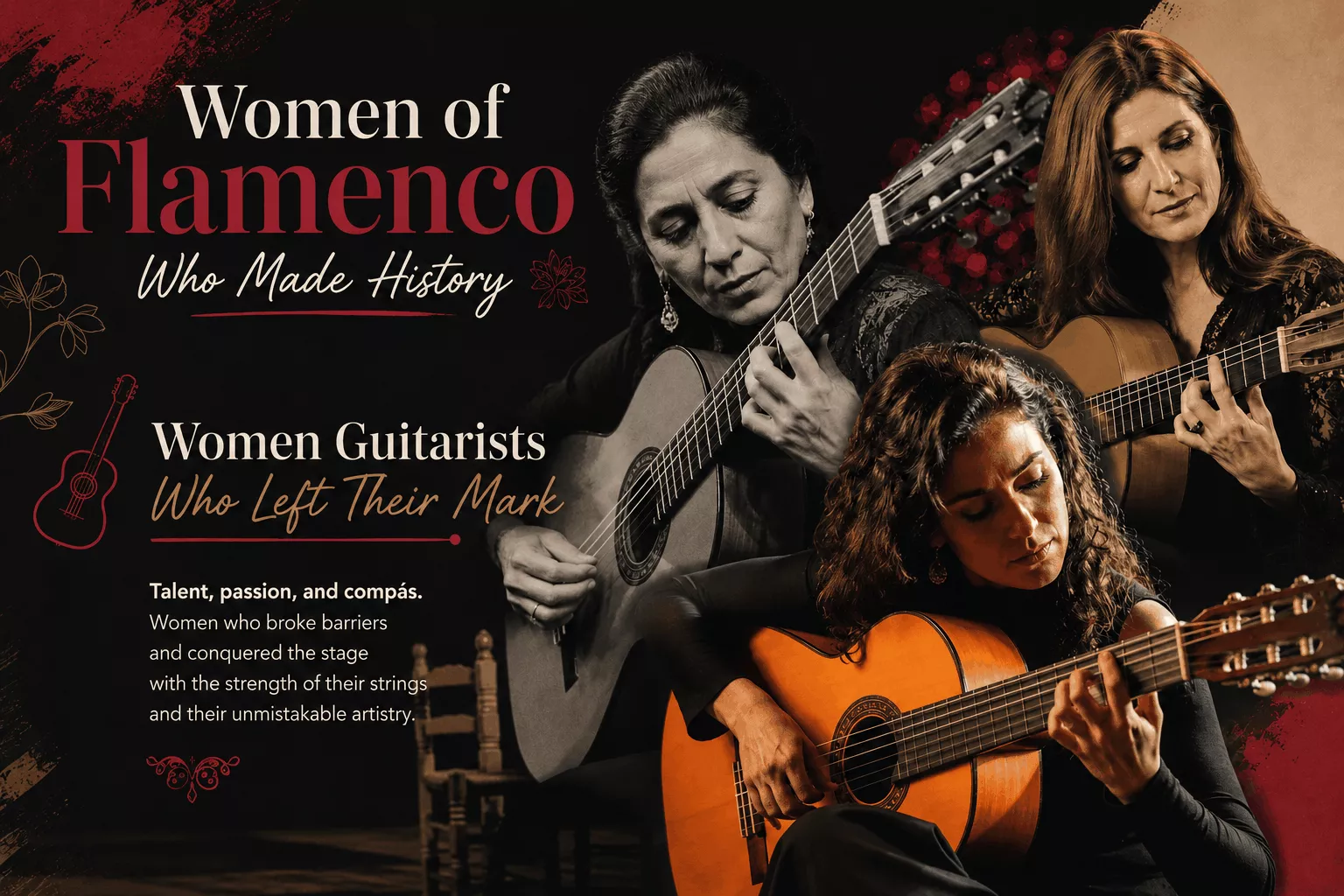
In flamenco guitar, duende appears when every note seems to say something beyond the melody. It lives in the rasgueado, in the pulse, in the silence between one chord and the next.
The guitarist accompanies, sustains, dialogues, and moves. Often their expression gives it away before their hands do: the whole body enters that state where the music seems to be born on its own. A falseta can completely shift the atmosphere of a room. Time seems to stop, and the guitar becomes voice, heartbeat, and shared emotion. Flamenco, without doubt, holds a language that needs no translation because it reaches straight into the soul.
You may also like: 7 Flamenco Singers in Granada You Should Know
How to recognise duende in a flamenco show
Duende does not announce itself. It gives no warning of when it will arrive, nor does it stay for the whole show. But when it appears, it leaves signs that anyone can recognise, even if they know nothing about flamenco.
When the audience falls silent
There is a silence that says everything. Not the polite silence of someone listening out of obligation, but that other silence — thick, held — in which no one dares to move for fear of breaking the moment. When an entire room stops breathing at once, it is almost always because duende has just walked onto the stage.
When the artist conveys something that does not seem rehearsed
Duende has something of improvisation, of discovery. Even if the piece has been rehearsed a thousand times, there are moments when the artist seems to encounter it for the first time: an unexpected finish, a glance between performers, a pause that was not planned. In that moment we no longer see a choreography — we see a person truly giving themselves in front of us.
When flamenco stops being a show and becomes an experience
And then the hardest thing to explain happens: we stop watching flamenco from the outside and start being part of it. The “olé” escapes on its own, without thinking. Goosebumps rise. We leave with the feeling of having lived something, not merely witnessed it. There, flamenco has stopped being a show and become an experience.
Flamenco duende at a tablao: why seeing it live matters
Duende can appear in one particular artist… but it can also break through simultaneously in the whole flamenco cuadro. And that, almost always, only happens live.
In a tablao, cante, baile, and toque coexist, but so does the listening between performers, the shared breathing, the improvisation and intuition. When everyone is present in the same pulse, something extraordinary happens: the entire stage vibrates as though speaking a single language. No recording, however good, can convey that.
The importance of atmosphere, acoustics, and the audience
Duende needs space to breathe. Closeness to the artists, the acoustics of an intimate room, the right dimness, and an engaged audience are just as important as the talent on the stage. In a tablao, energy flows between stage and room: the artist gives everything in performance and the audience responds through emotion, silence, or that “olé” that rises without thinking.
That is the atmosphere sought at places like Jardines de Zoraya, in the heart of the Albaicín, where live flamenco is performed every day with professional artists and the option to enjoy it with dinner — a setting designed, precisely, to give duende somewhere to appear.
Where to experience flamenco duende in Granada
Few places in the world are as tied to flamenco as Granada. And within Granada, there is a neighbourhood where duende seems to feel at home.
Flamenco in the Albaicín, near the Alhambra
The Albaicín, with its cobbled streets and views of the Alhambra, is one of those places where flamenco is not a tourist attraction but part of the landscape. Here, a step away from the Alhambra, cante, baile, and guitar find the perfect setting for duende to appear.
Because, in the end, if you truly want to understand what duende is, the best thing is not to read about it but to live it live. At Jardines de Zoraya, in the heart of the Albaicín, flamenco is experienced exactly that way: up close, unhurried, and with emotion right at the surface. The best way to discover duende is to let it find you.