
Shows at 18:00, 20:00 and 22:30 · Albaicín, 5 minutes from the Mirador de San Nicolás
Flamenco dance show in Granada
Bailaores and bailaoras in the line-up, three 60-minute shows a day and a room with only two rows: from any seat you see the footwork up close. The best flamenco in Granada.
What flamenco dance is
Flamenco dance rests on three things you learn to watch for as soon as someone points them out.
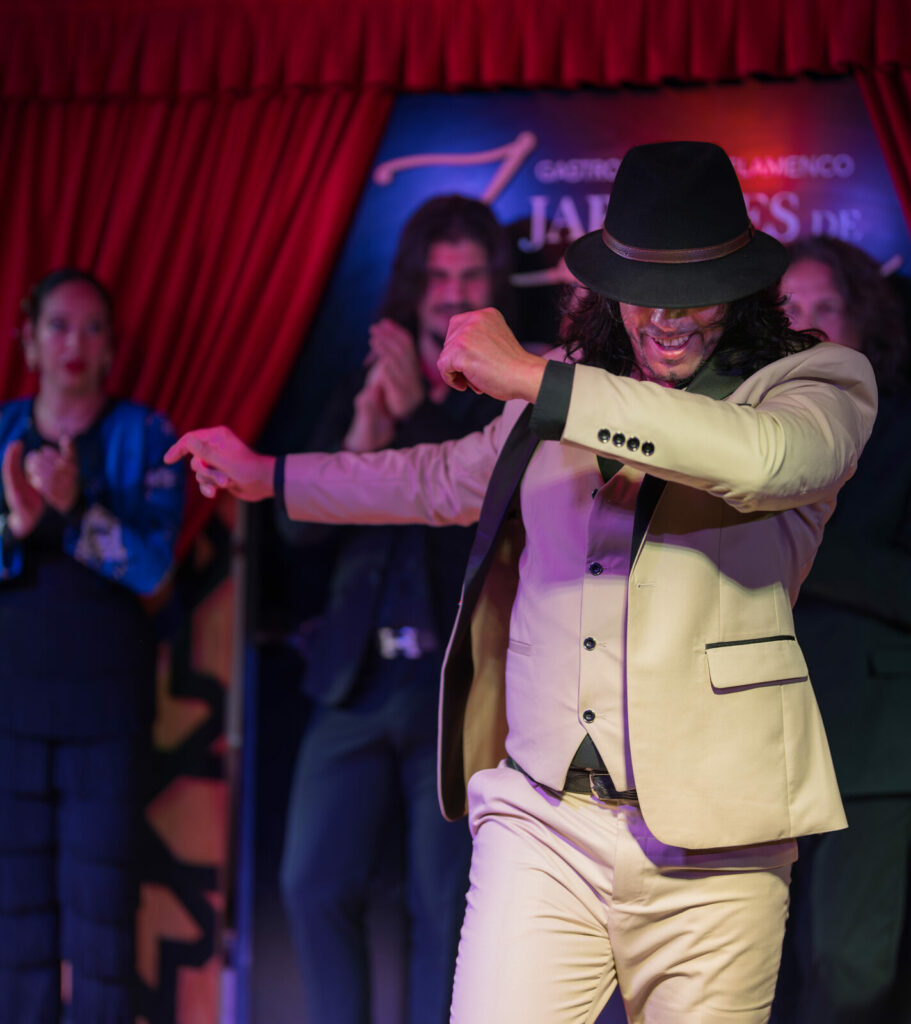
The zapateado is the foot marking the compás: it is not decoration, it is percussion. The dancer is as much a part of the music as the guitar.
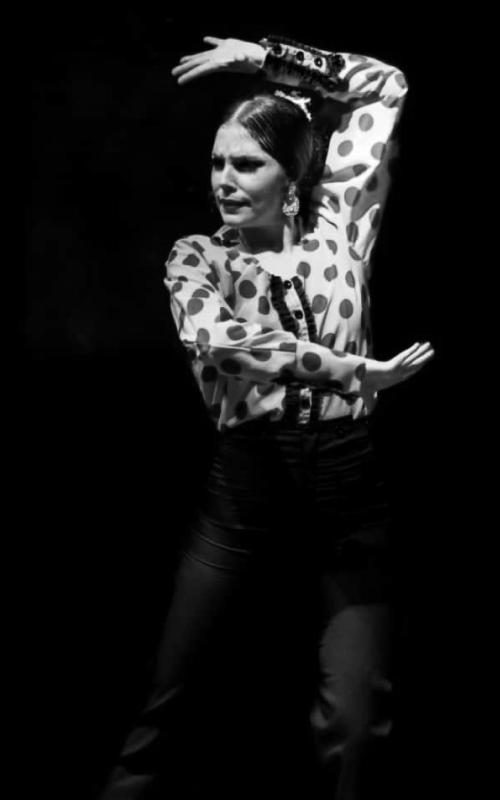
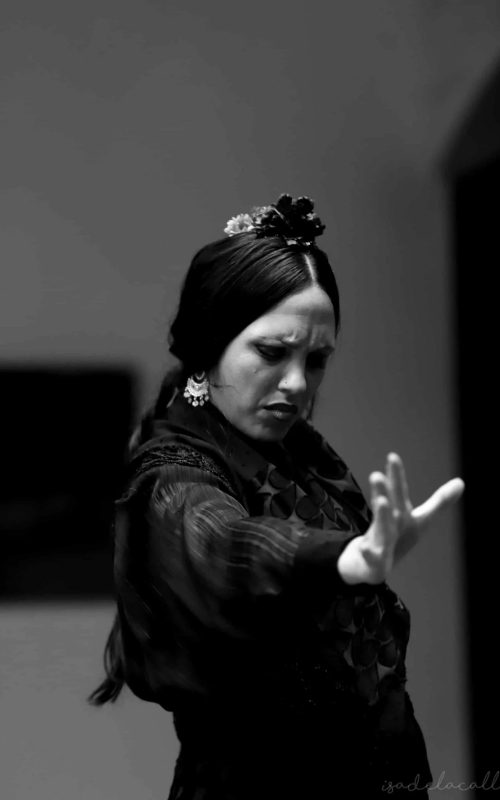
The braceo is the opposite — the slow work of arms and hands, drawing shapes while the feet strike. That contrast between the upper half and the lower half is what makes flamenco unlike any other dance.
And the remate is the ending: the music stops dead, everyone at once (singing, guitar and dance), with no warning. When it lands, the silence that follows is half the effect.
The bata de cola and the mantón
They are two tools, not two costumes. The bata de cola —the long-trained skirt— is handled with the feet, and making it turn without stepping on it is among the hardest things in the repertoire. The mantón, the fringed shawl, turns the arms into something far bigger than they are.
Both exist for the same purpose: to make the movement of the air visible. That is why they look better up close than in a photo.

Why tablao dance is not theatre dance
In a theatre the choreography is fixed: it is rehearsed and repeated the same way every night.
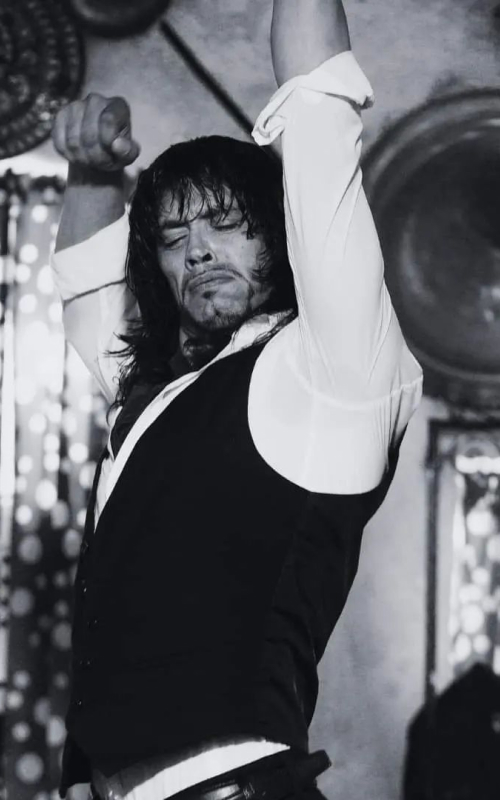
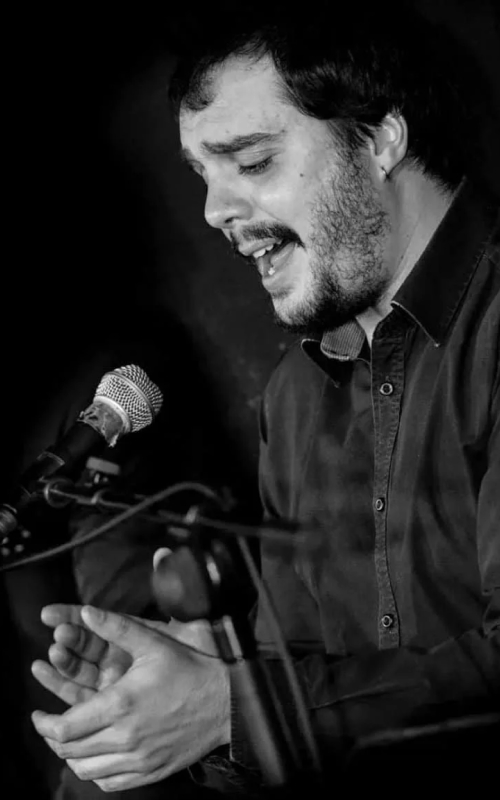
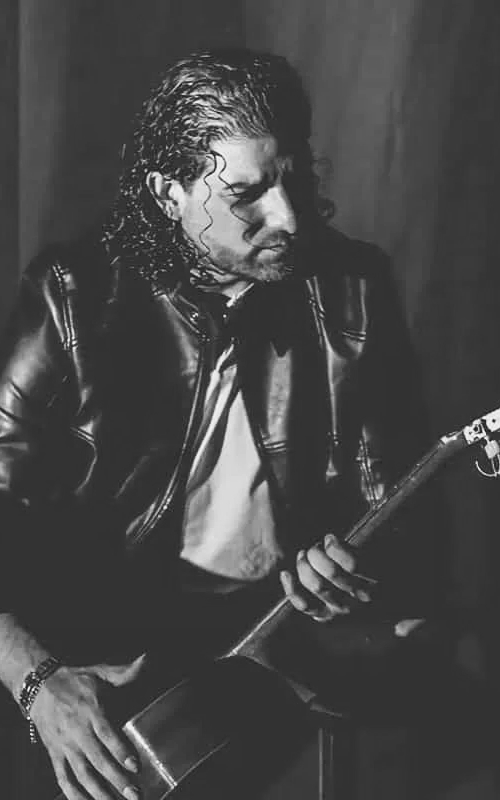
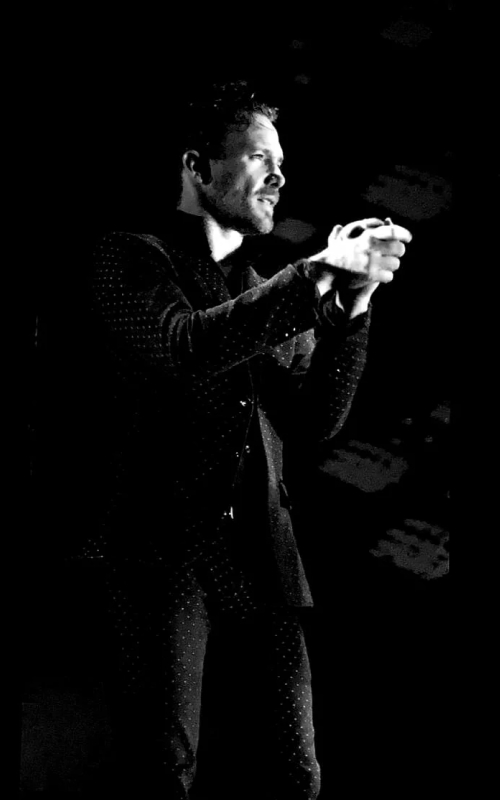
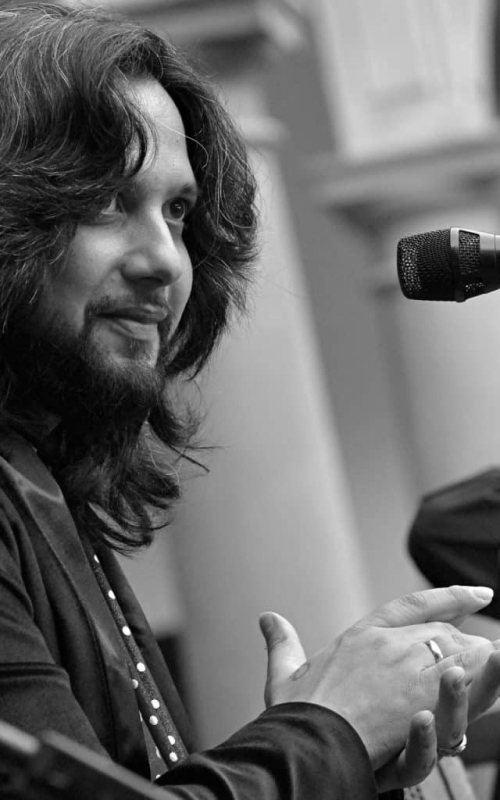
In a flamenco tablao it is not. The dancer and the musicians answer each other live — a call with the foot, the guitar picking it up, the singer deciding to stretch a line. That is why no two shows are alike, even with the same artists and the same palo.
It is also the reason it is danced a few metres from the audience and not twenty: they need to see each other’s faces for that to work.

Questions about the flamenco dance show in Granada
60 minutes. If you are coming just for the show, arrive 30 minutes early; with dinner, allow 1 h 45 min.
No. The line-up rotates and the programme changes every week.
Yes. The room has two rows in a U shape, so from any seat you are practically in the front row.
Yes. Children under 7 get in free and those aged 7 to 12 pay €15.
Recommended, especially in high season. Cancellation is free up to 24 hours before.