International Flamenco Day, Granada, and a history tied to cante jondo
Back to the blog
A tradition heard in its neighborhoods, passed down from generation to generation, finding in the Albaicín and Sacromonte some of its most special settings.
Flamenco Day 2026: when it is, its origin, and how to celebrate it
Flamenco Day is celebrated on November 16, a date to honor an art born in Andalusia, passed down from generation to generation, and declared Intangible Cultural Heritage of Humanity by UNESCO in 2010.
Every year, this day invites us to get closer to flamenco, learn about its roots, and discover the many ways it remains alive. From the deepest cante to the power of the dance, flamenco is history, feeling, and a way of understanding Andalusian culture.
When is Flamenco Day?
Flamenco Day is celebrated on November 16 every year. The date commemorates the international recognition this art received in 2010.
Flamenco Day, International Day, or World Day: are they the same thing?
Yes. Flamenco Day, International Flamenco Day, and World Flamenco Day are three names used to refer to the same celebration. The most common official name is International Flamenco Day, and all of them refer to November 16.
Why is International Flamenco Day celebrated?
On November 16, 2010, during a meeting held in Nairobi (Kenya), UNESCO inscribed flamenco on the Representative List of the Intangible Cultural Heritage of Humanity.
The nomination was driven by Andalusia, with the participation of Extremadura and the Region of Murcia, territories that are also part of the historical geography of this art.
This international recognition highlighted much more than a musical expression. UNESCO emphasized the richness of flamenco as a cultural expression, its ability to convey emotions, the diversity of its styles, and especially, the importance of the communities that keep it alive.
Flamenco is passed down through families, schools, peñas, groups, and artists who share their knowledge with new generations. Protecting it means preserving that collective memory and allowing it to keep evolving.
In 2026, it will be 16 years since that declaration, an occasion to remember that flamenco is a heritage that belongs to those who practice it, teach it, and enjoy it.
If you’d like to learn more about this recognition, you can read our article on flamenco as a World Heritage.
The origin of flamenco, in a few lines
The origin of flamenco lies in Andalusia and is the result of a long process of cultural and musical blending. Although its roots go back further, the first documented references to defined flamenco forms appear in the 18th century. Its consolidation as an artistic genre took place especially during the 19th century.
Different musical traditions of Andalusia, contributions from Romani culture, and other historical influences present in southern Spain came together in its formation. What began in family gatherings, popular settings, and celebrations gradually gained an artistic and professional dimension.
During the second half of the 19th century, the cafés cantantes became key spaces for its development. There, artists began performing for audiences, different styles took shape, and flamenco found new forms of expression. Decades later, tablaos would continue that tradition of bringing live art closer to audiences.
Its language is built around three pillars:
- The cante: the voice and the expression of feelings.
- The toque: the flamenco guitar and its dialogue with the other performers.
- The baile: movement, footwork, and arm movements as bodily expression.
Essential elements such as palmas and jaleo add to these, bringing rhythm and communication between artists.
You can learn more details in our guide on the origin and history of flamenco and discover its different flamenco palos.
Granada, 1922: the competition that defended cante jondo
Granada holds a special place in the history of flamenco thanks to an event that marked a turning point in its artistic recognition: the 1922 Cante Jondo Competition.
Driven by Manuel de Falla and backed by figures such as Federico García Lorca, Ignacio Zuloaga, and Andrés Segovia, the competition was held on June 13 and 14 at the Plaza de los Aljibes in the Alhambra. Its purpose was to champion the value of traditional Andalusian cante and draw attention to the need to preserve its oldest forms.
The competition brought together leading performers of the time, including Manuel Torre, La Niña de los Peines, and Diego Bermúdez, known as El Tenazas de Morón. It also marked a cultural recognition of an art form that had long been associated mainly with popular settings.
That event turned Granada into a point of reference for the defense and promotion of flamenco, a history that is still part of the city’s cultural identity.
If you’d like to learn about the relationship between the poet and this art, we invite you to discover flamenco in Federico García Lorca.
Where is Flamenco Day celebrated?
Flamenco Day is celebrated in Andalusia, across the rest of Spain, and in many other countries. Dance schools, conservatories, flamenco peñas, theaters, and cultural institutions organize concerts, recitals, workshops, talks, and educational activities.
In Andalusia, the regional government promotes a special program every year through the Andalusian Flamenco Institute, with events held across all eight provinces.
And in Granada?
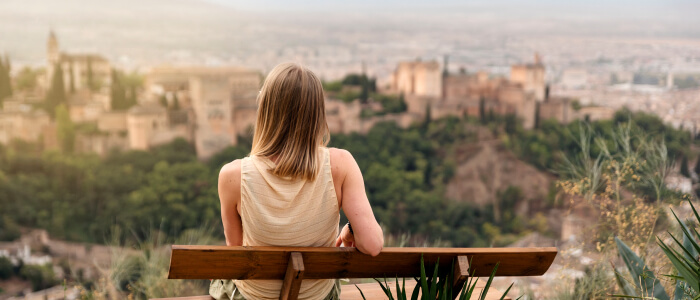
Granada has a very special relationship with this art. Flamenco tradition can be seen in its peñas, in the caves of Sacromonte, in the Albaicín, and in the zambras, one of the most characteristic expressions of Granada’s flamenco.
For November 2026, the official program includes, among other activities, a performance by the EFAD company at Plaza de las Pasiegas on November 15, a recital at the Biblioteca de Andalucía on the 16th, and a performance by guitarist Víctor Franco at the Peña Flamenca Universitaria La Gracia on the 13th.
There are also events in other towns across the province. You can check the official Flamenco Day program in Granada.
And if you’d like to learn about one of our city’s most unique traditions, discover the history of the Granada zambra.
What to do on Flamenco Day: 6 ideas for celebrating it
You don’t need to know every palo or be an expert to enjoy flamenco. This day is a great opportunity to discover something new, get closer to its artists, and have different experiences.
Watch live flamenco
There’s something no recording can fully capture: the emotion of a live show. The dialogue between the cante, the guitar, and the dance, the improvisation, and the connection with the audience make every performance different. It is precisely in that encounter that what we know as flamenco duende appears, that hard-to-explain emotion that turns a performance into something unforgettable. Discover what flamenco duende is and check out our shows at Jardines de Zoraya.
Take your first dance class
Why not celebrate flamenco by learning to dance? A beginner’s class is a chance to get familiar with the compás, discover the first movements, and experience how the body expresses itself through music. No previous experience or dance knowledge is needed. What matters is enjoying the learning process and letting yourself be carried by the rhythm. You can try a beginner’s flamenco class in Granada.
Listen to the greats of cante
Taking some time to listen to flamenco is another way to celebrate this day. You can start with great names linked to Granada, such as Enrique Morente, Estrella Morente, Marina Heredia, or Juan Pinilla, and continue with essential figures such as Camarón de la Isla, Antonio Mairena, or La Niña de los Peines. Listen to different interpretations, compare their voices, and discover how each artist brings their own personality. We recommend our selection of flamenco cantaores and famous songs from the history of flamenco.
Learn to tell the palos apart
Soleá, bulería, alegrías, tangos, or seguiriyas. Flamenco has numerous styles, each with its own compás, character, and form of expression. Try listening to a few examples and recognize their differences: some are more festive while others convey a deeper emotion. It’s an enjoyable exercise that will help you get much more out of any show. You can start with our guide to flamenco palos.
Get to know the women who made history
Flamenco has also been built thanks to great women who transformed cante and baile and paved the way for new generations. From Pastora Imperio and Carmen Amaya to La Niña de los Peines, their careers are part of the history of this art. Learning about their lives and contributions is a way to discover another perspective on flamenco. We invite you to explore our selection of women of flamenco who made history.
Dress as a flamenca (or at least wear a mantón)
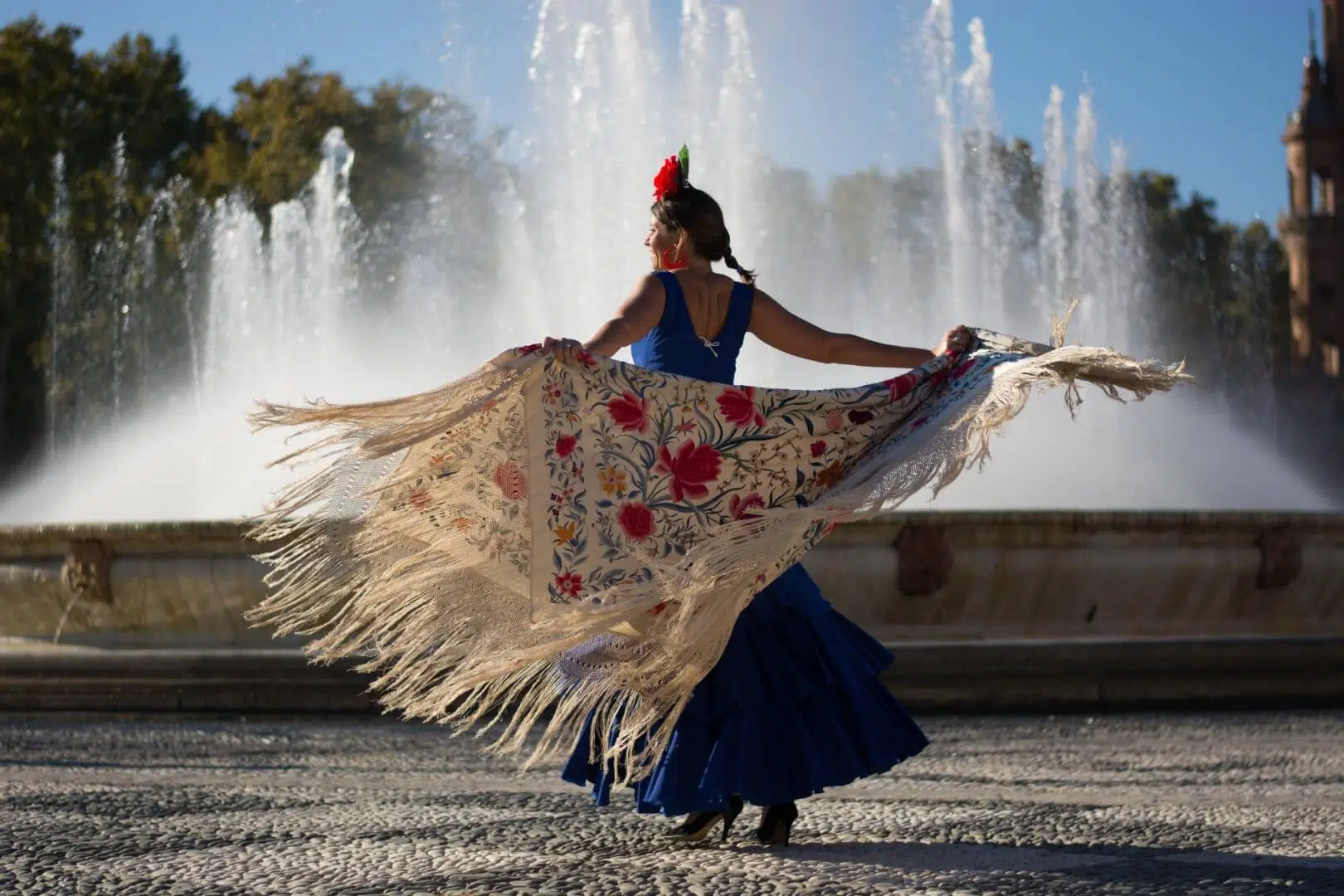
Flamenco also has a very recognizable aesthetic dimension. The flamenco dress, the ruffles, the earrings, and the mantones are part of a tradition that has evolved over time and continues to inspire designers and artists. You don’t need to dress up completely to join the celebration: a mantón can be enough to add a special touch to the day. Discover the history of the flamenco dress and the origin of the Manila shawl.
Tips for enjoying International Flamenco Day
If you’re planning to attend a show, these tips can help you make the most of the experience:
- Book in advance. November 16 and the surrounding days can bring higher demand at flamenco venues.
- Choose a full show. If it’s your first time, look for a show that brings together cante, toque, and baile to discover the different dimensions of this art.
- Respect the moments of silence. Especially during the cante, listening attentively is part of the experience; at flamenco peñas you’ll often see signs that read “Knowing how to listen is an art.”
- Join in with palmas when appropriate. Not every moment calls for audience participation. Respect the rhythm so as not to throw off the artists’ compás.
- The “olé” has its moment. Jaleo is a form of communication and recognition, but it’s better to let yourself be carried away by the performance than to join in out of obligation.
- Arrive early and soak up the atmosphere. If you can, round off the evening with dinner and turn the show into a cultural and culinary experience.
How we celebrate Flamenco Day at Jardines de Zoraya
At Jardines de Zoraya, we believe flamenco is an essential part of Granada’s identity, and that the best way to celebrate it is by bringing it closer to those who want to discover it.
In the heart of the Albaicín, our venue brings together the tradition of a Granada carmen, its gardens, and its Nasrid-inspired courtyard, with a stage where flamenco comes to life every night.
We offer 60-minute shows in three daily sessions, at 6:00 PM, 8:00 PM, and 10:30 PM, with artists representing different generations and styles of flamenco. You can learn about the performers who are part of our lineup in our artists section.
You can also complete the experience with dinner and a show and enjoy an evening that combines culture, gastronomy, and tradition in one of the most special corners of the Albaicín.
This November 16, celebrate Flamenco Day by discovering the emotion of a live show in Granada. Book your experience at Jardines de Zoraya
Frequently asked questions about Flamenco Day
What is celebrated on November 16?
November 16 commemorates the recognition of flamenco as Intangible Cultural Heritage of Humanity by UNESCO, which took place in 2010. It is a day dedicated to spreading awareness of this art, recognizing its artists, and remembering the importance of preserving and passing on a cultural tradition that continues to evolve.
How many years has flamenco been a World Heritage?
In 2026, it will be 16 years since UNESCO recognized flamenco as Intangible Cultural Heritage of Humanity. Its roots, however, go back much further: its first documented forms appear in the 18th century, and its consolidation as an artistic genre took place especially during the 19th century.
Is Flamenco Day a public holiday?
It is not a general public holiday in Spain. November 16 is a commemorative date celebrated through cultural activities, shows, workshops, and events related to flamenco, especially in Andalusia, where it holds a fundamental place in cultural life.
What are the parts of flamenco?
Flamenco is built around three pillars: cante, toque, and baile. These are joined by elements such as palmas, which mark the compás, and jaleo, through which artists and audience express their connection with the performance. All of them are part of an artistic language that combines music, rhythm, and emotion. Learn more about flamenco cante.
Where can you watch flamenco on Flamenco Day?
You can enjoy live flamenco at a peña flamenca, a theater, or a tablao. In Granada, you’ll find different venues where you can get closer to this art and discover its various expressions. You can check the official websites of the local councils, as they organize a special program for this day every year. If you’re looking for an experience that combines a show, atmosphere, and gastronomy in the Albaicín, you can book your tickets at Jardines de Zoraya.